
Running a small business today involves more than offering quality products or reliable services. Before contacting a company, many customers search online, compare options, read reviews, and explore social media pages. This shift in customer behavior gives small businesses an opportunity to compete with larger brands and reach new audiences without spending enormous amounts on traditional advertising.
A well-planned online marketing strategy for small businesses can increase visibility, attract qualified prospects, strengthen customer relationships, and support long-term growth. The key is to select the right channels, understand your audience, and consistently provide useful information.
What Does Online Marketing Mean?
Common forms of online marketing include:
- Search engine optimization (SEO)
- Social media promotion
- Blog and content marketing
- Email campaigns
- Search and social media advertising
- Local search optimization
- Business website promotion
- Customer reviews and reputation management
The purpose is to make your business easier to discover and give customers clear reasons to choose you.
Why Small Businesses Need Online Marketing
Small companies often work with limited resources while competing against established brands. Digital marketing can help level the playing field by allowing businesses to reach specific audiences, communicate directly with customers, and monitor campaign performance.
1. Improve Your Online Visibility
Potential customers may use Google, social media, video platforms, or online directories to find products and services. If your business is not visible on these platforms, customers may choose a competitor instead.
A focused digital marketing plan helps your business appear in the places where your target audience is actively searching.
2. Establish Trust and Recognition
Customers are more likely to consider a business that appears professional, active, and reliable online.
A well-designed website, helpful articles, regular social media updates, customer reviews, and informative videos can make your company more memorable. Over time, consistent communication can help turn an unfamiliar business into a trusted choice.
3. Turn Visitors Into Leads
Digital marketing should support business growth, not just generate views or likes. Your online platforms should make it simple for interested people to take the next step.
Useful lead-generation options include:
- Website inquiry forms
- Click-to-call buttons
- WhatsApp or direct messaging
- Dedicated landing pages
- Appointment booking tools
- Email newsletter sign-ups
- Social media messages
When these options are easy to find, potential customers are more likely to contact you.
4. Control Your Marketing Investment
Traditional advertising can require a significant upfront budget and may be difficult to measure. Online marketing gives small businesses more flexibility.
You can begin with a modest budget, test different approaches, and increase spending when a campaign produces positive results. Many advertising platforms also allow you to target people by location, age, interests, search behavior, and other characteristics.
Five Online Marketing Strategies for Small Businesses
Every business does not need to use every available platform. The best approach is to focus on the channels that match your customers, industry, and goals.
1. Improve Your Search Engine Visibility
Search engine optimization helps your website appear when people search for information, products, or services related to your business.
For example, a local bakery might target searches such as:
“top bakery near me”
“custom birthday cakes in [city]”
“where to order celebration cakes”
Effective SEO may include:
- Researching relevant search terms
- Publishing useful website content
- Improving page titles and descriptions
- Making the website easy to navigate
- Increasing page speed
- Optimizing for mobile devices
- Earning links and mentions from reputable websites
- Strengthening local search signals
SEO usually takes time, but it can provide a steady source of unpaid website traffic once your pages begin ranking well.
2. Build a Social Media Presence
Social media allows small businesses to communicate with customers in a more personal and immediate way. The best platform depends on your audience and the type of content your business can create.
Instagram, Facebook, LinkedIn, YouTube, and TikTok may all be useful for different industries.
Possible content ideas include:
- Practical advice
- Customer success stories
- Product tutorials
- Behind-the-scenes updates
- Demonstration videos
- New product announcements
- Limited-time promotions
- Answers to common customer questions
You do not need to publish content on every platform. Choose the channels your customers use most and maintain a realistic posting schedule.
3. Publish Helpful Content
Content marketing helps businesses attract people by answering questions and addressing common problems. Instead of making every post a sales message, create resources that your audience will find genuinely useful.
For example, a fitness studio might publish:
“A Beginner’s Guide to Creating a Weekly Home Workout Routine.”
A marketing consultant might write:
“How Small Businesses Can Improve Their Online Visibility Without Wasting Money.”
Helpful content can bring new visitors to your website, demonstrate your expertise, and encourage potential customers to learn more about your services.
4. Strengthen Your Local Search Presence
Businesses that serve a particular area should prioritize local marketing. Customers often search for nearby providers when they need immediate services or want to visit a physical location.
Keep your business name, address, phone number, opening hours, and website details accurate across online directories. Claim and update your Google Business Profile, add high-quality photos, respond professionally to reviews, and publish information that is relevant to your local community.
Local SEO can benefit businesses such as:
- Restaurants and cafés
- Hair salons and beauty clinics
- Medical and dental practices
- Fitness centers
- Property professionals
- Local shops
- Home repair companies
- Consultants and other service providers
5. Use Paid Advertising Carefully
Organic marketing methods can take time to produce results. Paid advertising can help a business reach a targeted audience more quickly through search engines and social media platforms.
Before launching an advertising campaign, define:
- The result you want to achieve
- The audience you want to reach
- The message and offer you will present
- The page visitors will see after clicking
- The budget you are prepared to spend
- The measurements you will use to judge success
Begin with a controlled test rather than spending a large amount immediately. Review the data, identify what performs well, and adjust the campaign accordingly.
How to Develop an Online Marketing Plan
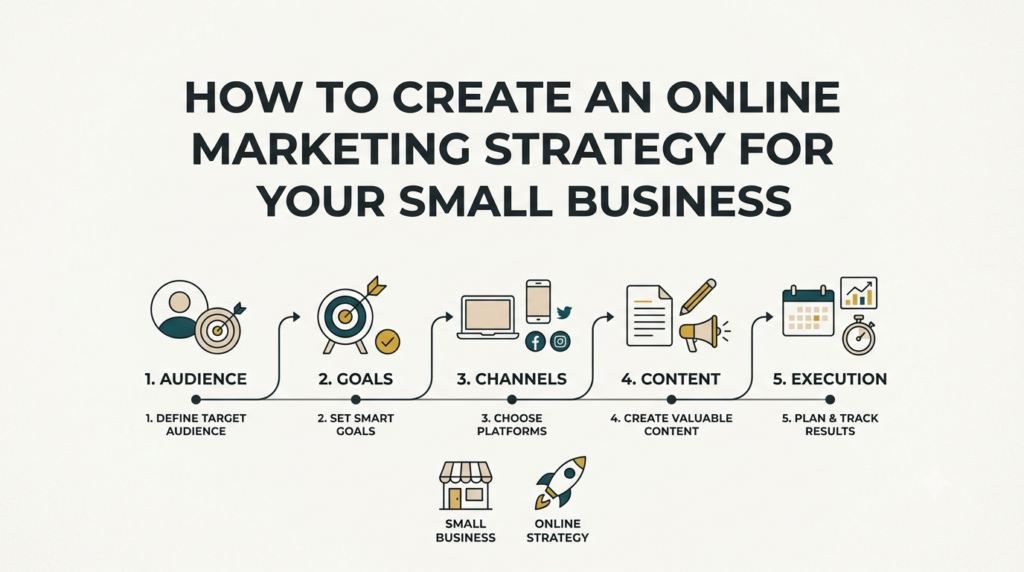
A practical marketing plan can be created in a few clear stages.
Step 1: Understand Your Ideal Customer
Start by identifying the people most likely to purchase from you. Consider their needs, concerns, location, budget, and online habits.
Ask questions such as:
- What problem does my business solve?
- Who experiences this problem most often?
- What phrases might customers type into a search engine?
- Which websites and social platforms do they use?
- What factors influence their buying decision?
The clearer your audience profile, the more relevant your marketing will become.
Step 2: Define Measurable Objectives
Avoid vague goals such as “get more attention.” Instead, choose objectives that can be tracked.
Examples include:
- Increase organic website visits
- Receive more quote requests
- Generate additional phone calls
- Improve online sales
- Gain newsletter subscribers
- Increase bookings
- Build awareness in a specific local area
Specific goals make it easier to evaluate your progress.
Step 3: Select Suitable Channels
You do not need to maintain a presence on every digital platform. Select channels based on your audience and available resources.
For example, a local plumber may focus on Google Business Profile, local SEO, and search advertising. A fashion brand may gain more value from Instagram, TikTok, influencer partnerships, and visual content.
Step 4: Plan and Publish Useful Content
Create a simple content calendar so you know what to publish and when. Mix educational, promotional, and relationship-building content.
Strong content may:
- Answer customer questions
- Explain your process
- Show how your product works
- Share customer experiences
- Address common concerns
- Highlight your expertise
Consistent, useful communication can build trust before a customer is ready to buy.
Step 5: Measure Performance
Digital marketing provides access to valuable performance data. Review your results regularly and use the information to improve future campaigns.
Important metrics may include:
- Website traffic
- Search impressions
- Keyword rankings
- Contact form submissions
- Phone calls
- Bookings
- Sales
- Advertising cost per lead
- Email open and click rates
- Social media engagement
Focus on metrics connected to your business goals rather than tracking numbers simply because they are easy to see.
Online Marketing Errors Small Businesses Should Avoid
A lack of planning can cause businesses to waste time and money. Watch out for these common problems:
Trying to use every platform: Managing too many channels can reduce quality and consistency.
Publishing without a purpose: Content should support a business objective, such as educating customers, generating inquiries, or increasing sales.
Measuring popularity instead of results: A large follower count does not always lead to revenue. Leads, bookings, and sales are often more meaningful indicators.
Neglecting mobile users: Many customers browse and make inquiries from smartphones, so your website must be easy to use on smaller screens.
Ignoring customer reviews: Reviews influence buying decisions and should be monitored and answered professionally.
Failing to track campaigns: Without reliable data, you cannot determine which activities deserve more investment.
Expecting immediate success: SEO, content marketing, and social media growth usually require regular effort over time.
Final Thoughts
Online marketing gives small businesses practical ways to become more visible, connect with customers, and compete in a crowded marketplace. You do not need a large team or an unlimited budget to begin. Start by learning what your audience needs, choose the most relevant marketing channels, and create content that provides genuine value.
Improve your website, maintain accurate local listings, communicate consistently on selected social platforms, and monitor the results of your efforts. By making gradual improvements and focusing on strategies that support your business goals, you can build a stronger online presence and create more opportunities for sustainable growth.